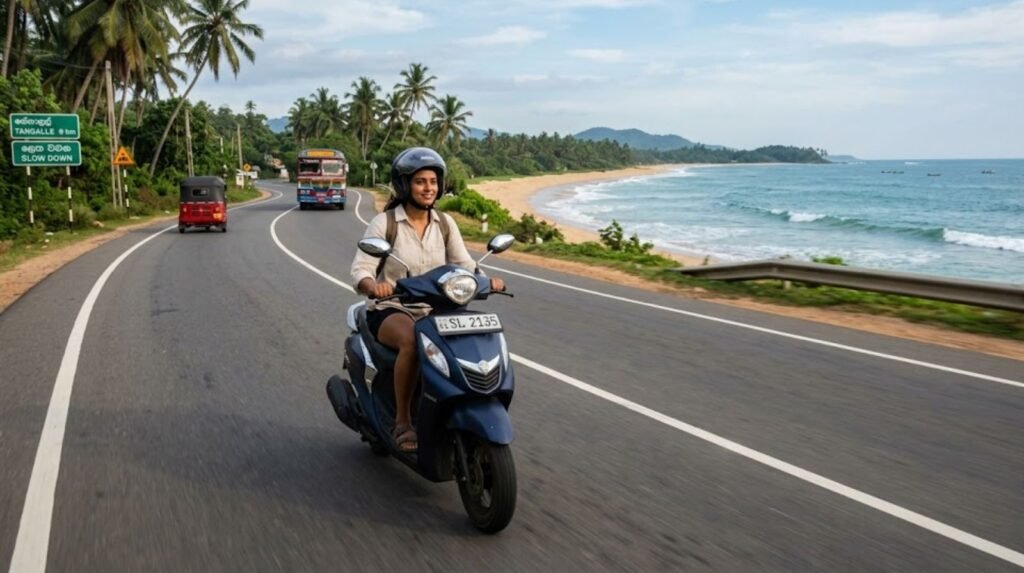
Most travel guides will tell you to book a cab and be done with it. After spending eight days riding through Sri Lanka on a scooter, I’d say that’s the single biggest mistake you can make.
There is a version of Sri Lanka you see from the window of an air-conditioned car, and then there is the version you smell, hear, and feel when you’re moving through it at 60 km/h on a two-wheeler — coconut groves blurring past, the salt in the air thickening as you drop south, roadside tea stalls close enough to stop at on a whim. They’re not the same island.
This guide covers everything I wished I’d known before I landed — from picking up a local driving permit at the airport in under fifteen minutes, to the daily costs of renting a scooter, tuk-tuk, or car, to a practical strategy for handling the long run down to the southern coast without exhausting yourself on day one.
What are your options for getting around?
Sri Lanka is a compact island, and it rewards slow, independent travel. You have three realistic choices when it comes to renting a vehicle yourself: a scooter, a tuk-tuk, or a basic four-wheeler. Each one suits a different type of traveller.
A scooter is the most versatile. It gets you into places a car can’t reach, costs very little, and — once you’ve found your rhythm on the roads — is genuinely the most enjoyable way to move between towns. A tuk-tuk sits somewhere in the middle: roomier than a scooter, easier on long stretches, and a good option if you’re travelling with luggage or a companion who isn’t keen on two wheels. A car makes sense if you’re in a group, travelling with young children, or covering a lot of ground between major cities in a single day.
Daily rental rates at a glance
Prices vary depending on where you rent, the condition of the vehicle, and the time of year — but these are the ranges you can expect to pay in 2025:
| Vehicle | Per day (USD) | Per day (INR approx.) |
|---|---|---|
| Scooter
Most common choice for solo travellers
|
$7 – $10 | Rs. 580 – Rs. 830 |
| Tuk-tuk
Good for couples or those with luggage
|
$10 – $15 | Rs. 830 – Rs. 1,250 |
| Car (basic four-wheeler)
Best for groups or long inter-city drives
|
$30 – $50 | Rs. 2,500 – Rs. 4,150 |
You’ll pay in Sri Lankan Rupees at the rental shop. Keep some cash on hand — most smaller rental outfits don’t accept cards.
The driving permit: get it before you leave the airport
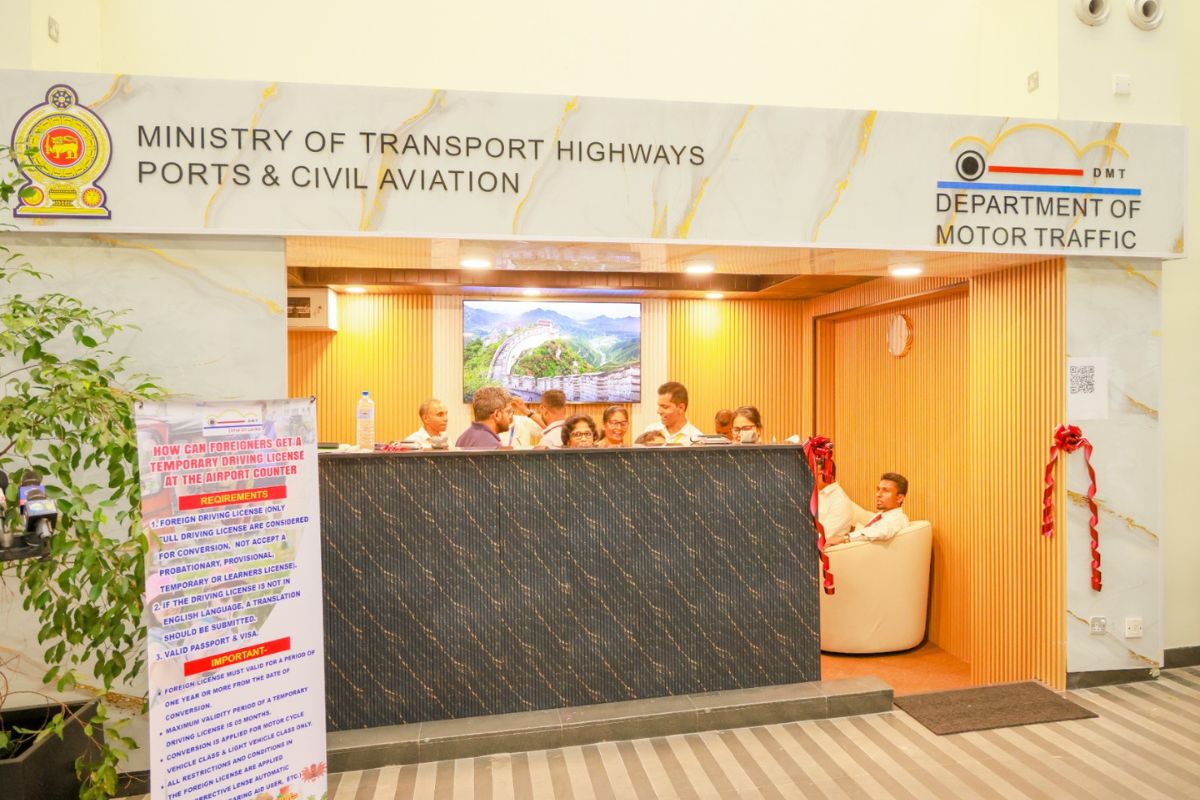
This is the part that trips most people up. Sri Lanka does not recognise foreign driving licences on their own. Before you can legally ride or drive anything you’ve rented, you need a locally-issued driving permit — and the simplest place to get one is right there at Colombo’s Bandaranaike International Airport, moments after you land.
The process is straightforward and takes about fifteen minutes if you have everything ready. Here’s how it works:
- 01: Find the Transport Department boothAs you walk out of arrivals, you’ll see a row of money changers. The Transport Department counter is on the right-hand side — it’s easy to miss if you’re not looking for it, so don’t get swept along with the crowd.
- 02: Bring your home country driving licenceThe booth accepts licences from most countries — Indian, British, international — whatever you’re carrying. Just make sure it’s valid.
- 03: Pay 15,000 LKRThat works out to approximately Rs. 5,000 Indian Rupees, or around $50 USD at current rates. Exchange some cash at the airport before heading to the counter, since the booth operates in local currency only.
- 04: Collect your permitThey’ll verify your licence, issue the local permit, and you’re done. The permit is valid for 30 days and covers all vehicle categories — scooter, tuk-tuk, and car.
Should you rent at the airport, or somewhere further along?
It depends entirely on where you’re headed first. If you’re spending your first night in Colombo or somewhere nearby, picking up a scooter at the airport makes perfect sense — permits sorted, bike in hand, off you go.
If, however, your first stop is deep in the south, I’d suggest a different approach.
Riding 220 kilometres in Sri Lankan heat on your first day is the kind of decision you’ll regret by the time you hit the halfway point.
Tangalle sits at the southernmost edge of the island, roughly 220 km from Colombo — about three and a half hours by cab on the Southern Expressway. Rather than renting a scooter at the airport and grinding through that distance on day one, I took a taxi straight to Tangalle and picked up a scooter there. It cost slightly more on the first day, but I arrived rested, I knew the area, and every ride after that was something I actually wanted to do — short, scenic, on my terms.
If you’re planning a southern circuit, this is the smarter way to start it.
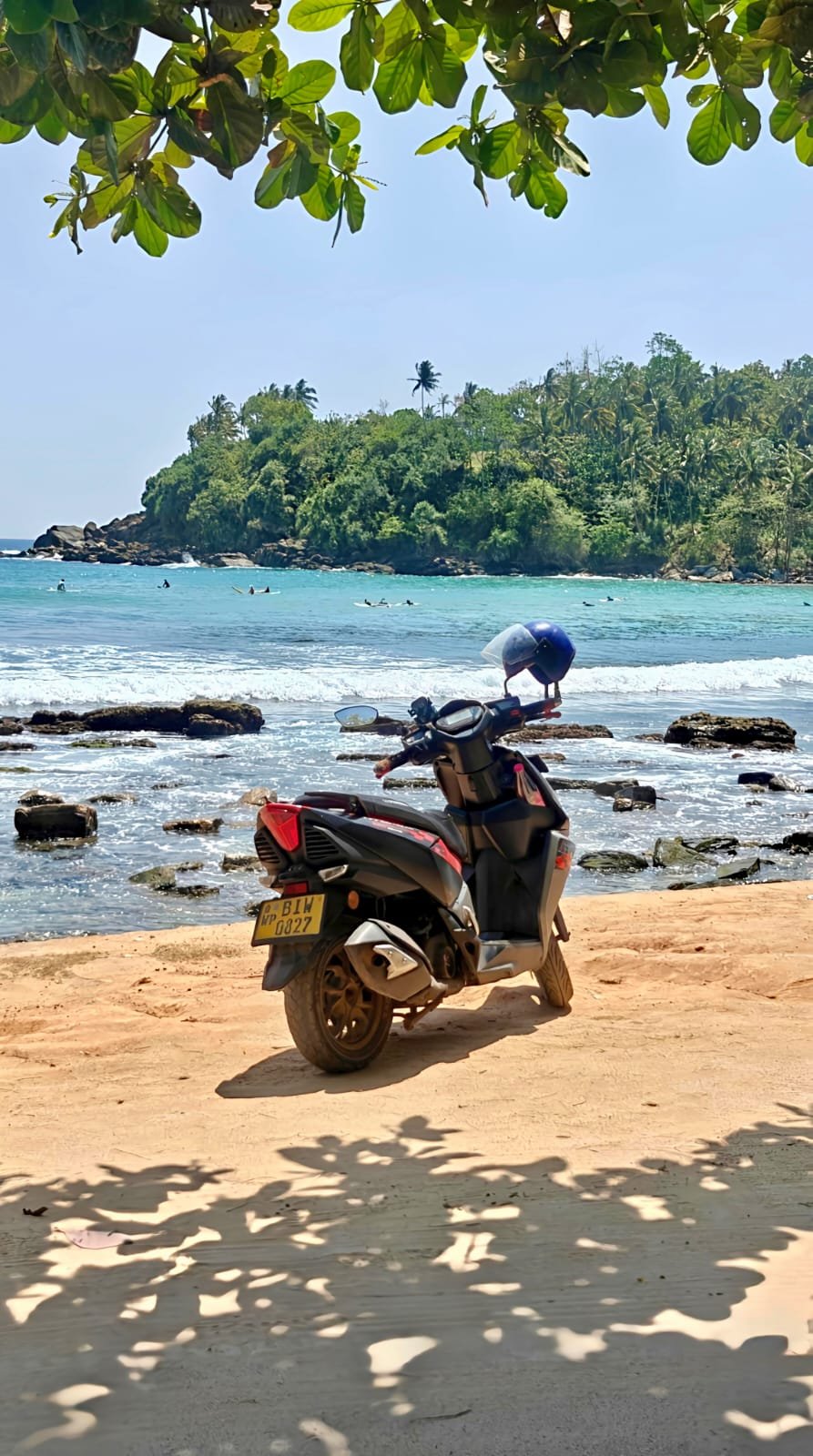
What is it actually like to drive in Sri Lanka?
Better than you’d expect. Considerably better, in fact, if you’ve driven in other parts of South Asia.
The roads are largely well-maintained. There are no surprise potholes swallowing your front wheel, no unmarked speed breakers appearing out of nowhere. Most drivers follow the rules. Traffic moves with a predictable rhythm once you’ve spent an hour or two adjusting to it. Signage is reasonably clear, and people are, on the whole, patient with riders who are still finding their bearings.
The one thing I’d flag: give bus drivers a wide berth. They are assertive in a way that suggests they have never once doubted their right of way, and on narrower roads, they will take up whatever space is available. It’s not aggressive — it’s just the understood hierarchy of the road. Adjust accordingly, and you’ll be fine.
Beyond that, Sri Lanka is one of the more pleasant places I’ve ridden. The roads through the hill country wind in exactly the way you’d want them to, the coastal stretches are flat and fast, and even the busier towns are manageable once you stop bracing for the worst.
Before you go: a quick checklist
Exchange cash before joining the permit queue. Carry your home driving licence. Head to the Transport Department booth on the right side of arrivals. Pay 15,000 LKR and collect your 30-day permit. Then decide whether to rent on the spot or continue by cab to your first stop.
Sri Lanka is not a country you want to rush through, and a scooter is one of the best arguments I know for slowing down. You’ll stop more, notice more, and come back with the kind of stories that don’t start with “so we were on the tour bus.” The permit process takes fifteen minutes. The rest takes care of itself.
Things to Keep in Mind Before Renting
If you’re considering renting a scooter in Sri Lanka, here are a few practical tips:
- Always inspect the vehicle before renting and note any existing damage
- Ensure you are given a helmet and use it at all times
- Avoid riding during peak afternoon heat, especially on longer routes
- Keep a digital or offline map handy
- Carry your permit and licence with you at all times